
What Skipping This Costs You
Leave your garage door as-is after a long, wet hurricane season and you're setting yourself up for a spring full of expensive surprises. A spring that's been quietly rusting since July doesn't usually announce itself with a warning — it snaps, often while the door is open, and now you're looking at an emergency repair instead of a routine one. Weatherstripping that cracked under months of sun and swelling wood doesn't just let in a draft; it lets in dust, palmetto bugs, and moisture every time the drier winter air starts moving. And a door that's slightly off track from storm winds will only get worse with every open-and-close cycle, eventually stressing the opener motor enough to burn it out early. None of this is dramatic on its own. All of it is cheaper to fix in October than in February.
Why Winter Here Is Different (Not Snow, But Still a Shift)
Nobody in Charlotte County is scraping ice off a garage door, but the transition from our wet, humid summer into the drier, cooler winter months still puts real stress on the hardware. Wood and composite panels that absorbed moisture all summer start to dry out and contract, which is exactly when hairline cracks and warping show up. Metal components that were exposed to salt air and storm humidity for months are at their most vulnerable to rust once things dry out and that rust gets a chance to flake and spread. And the lower humidity itself can stiffen up lubricant on rollers, hinges, and tracks, making a door that ran smoothly in August suddenly sound rough in November.
The Winter Prep Checklist
1. Inspect Springs and Cables for Rust and Fraying
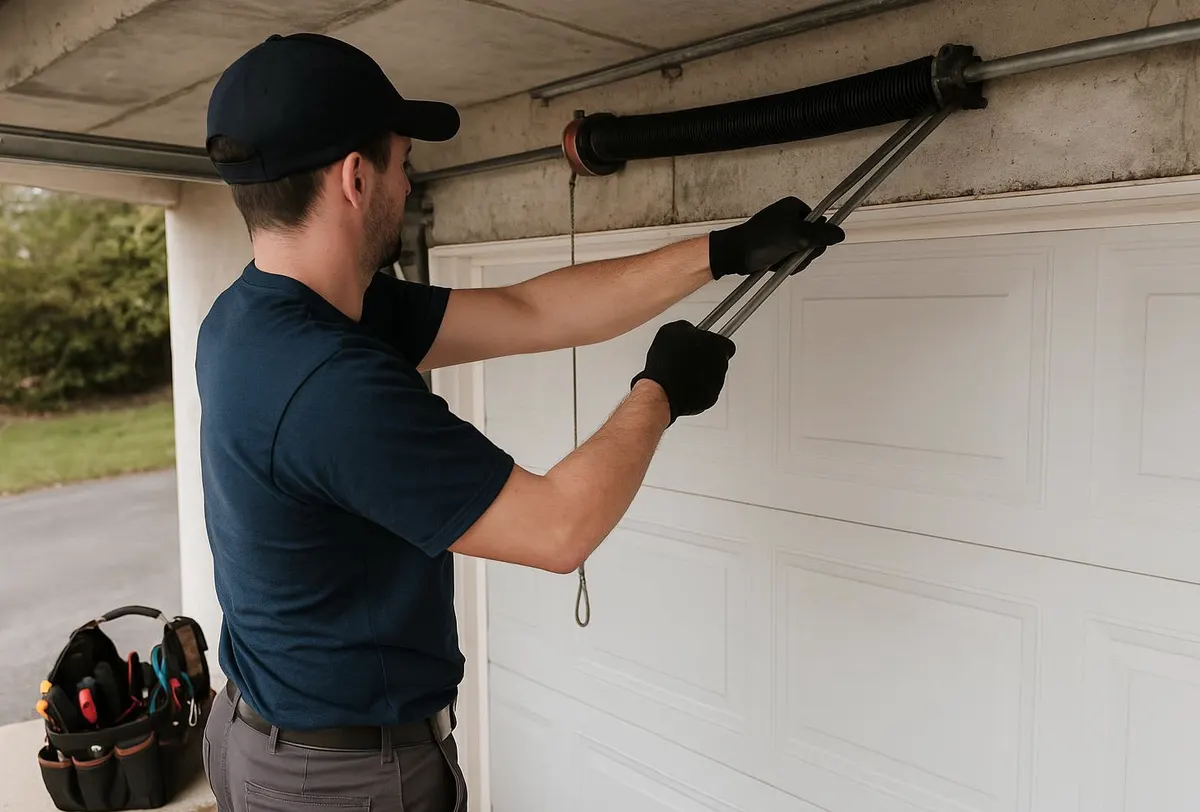
Torsion springs take a beating from coastal humidity and salt air, especially on homes closer to the water in places like Rotonda West or Punta Gorda Isles. Look for orange or reddish discoloration, flaking, or any visible gaps between coils. On the cables, check for fraying strands near the bottom bracket. Springs are under enormous tension — if you see rust or damage, this is not a DIY fix. A full inspection now is far cheaper than a snapped spring later.
2. Lubricate Everything That Moves
Rollers, hinges, the torsion spring itself, and the track all need a fresh coat of a silicone-based garage door lubricant (skip the WD-40, it attracts dust). Months of humidity can gum up old lubricant and leave grit sitting on metal parts. A five-minute lubrication job now prevents the grinding, squealing, and jerky movement that shows up once the air dries out and friction increases.
3. Check Weatherstripping and Seals
The rubber seal along the bottom of the door and the weatherstripping around the frame take a direct hit from summer heat, UV exposure, and swelling moisture. By fall, it's common to find cracking, gaps, or sections that have pulled away entirely. A compromised seal lets in cooler drafts overnight, plus dust and insects looking for a way in as temperatures shift. Replacing worn weatherstripping is a straightforward job and one of the best returns on a small repair.
4. Re-Check Track Alignment After Storm Season
If your door took any wind load this past hurricane season — even without visible damage — the tracks can shift slightly out of alignment. Watch the door move through a full cycle. Any wobble, hesitation, or grinding near the top or bottom usually means the rollers aren't seated correctly anymore. Left alone, this wears down the opener and the rollers faster than normal use would.
5. Test the Auto-Reverse Safety Feature
Place a block of wood or a similar object in the door's path and close it. The door should reverse immediately on contact. This is a two-minute test that confirms your safety sensors are still aligned and functioning, which matters year-round but is especially worth confirming after a season of storms that can knock sensors out of alignment.
6. Look Over Panels for Swelling or Cracking
Wood composite panels are especially prone to absorbing moisture during Charlotte County's humid stretch and then drying out and cracking as the air turns drier in winter. Run your hand along seams and look for warping, soft spots, or paint that's starting to bubble. Small cracks are manageable if caught early; ignored, they widen and let moisture back in every time it rains.
7. Clean and Tighten Hardware
Salt air corrodes exposed bolts, hinges, and brackets faster than most homeowners expect, particularly on doors facing the coast. A quick wipe-down and a check with a wrench on visible hardware catches loose bolts before they become a rattling, misaligned door.
When to Call Punta Gorda Garage Door Repair
If you spot rust on the springs, cracked weatherstripping you can't replace cleanly yourself, or a door that's grinding, hesitating, or off track, it's time to bring in a professional rather than risk a spring under tension or a misaligned track. Our Garage Door Maintenance & Tune-Up service covers a full inspection, lubrication, hardware tightening, and alignment check in one visit, so you're not guessing what else might fail this winter. If a spring or cable is already showing wear, our Garage Door Spring Repair team handles that safely with the right tools and tension equipment — not something to attempt on a ladder with a wrench.
If your garage door is showing any of these signs, don't wait for it to get worse. Call Punta Gorda Garage Door Repair today and get it handled before winter settles in across Charlotte County.