
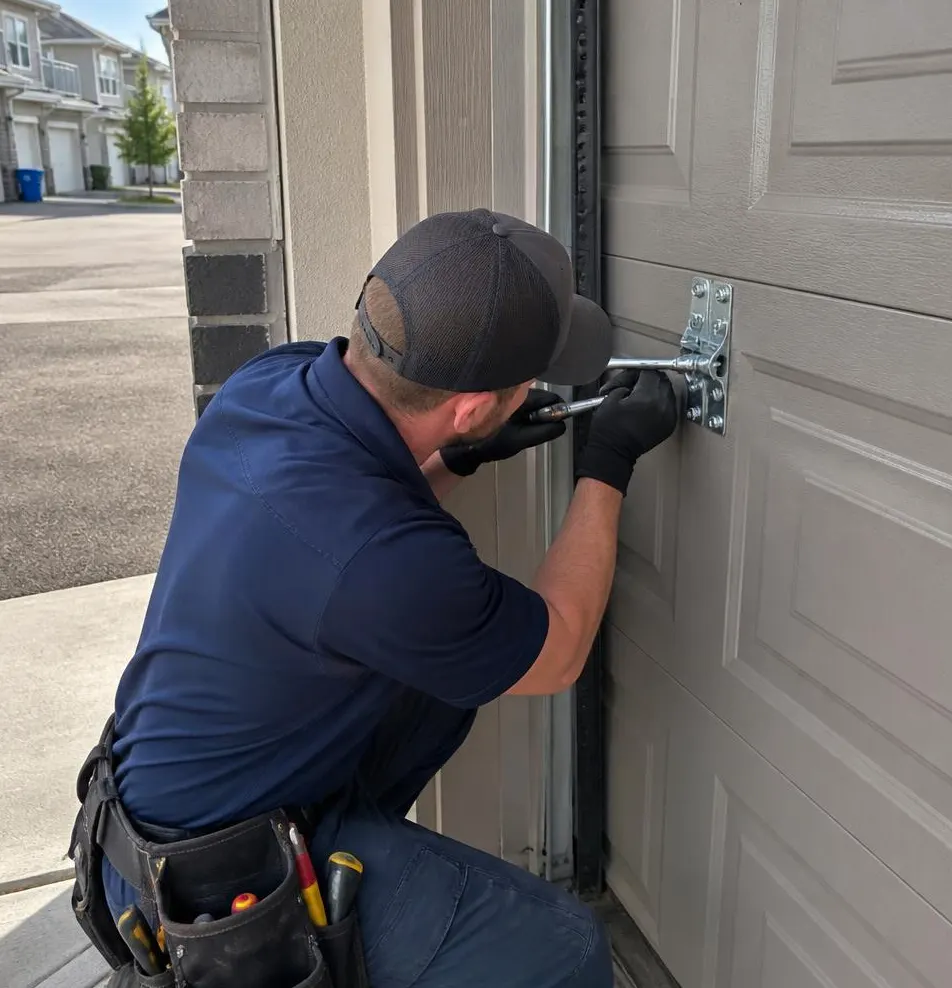
Short answer: check the springs, the wind-load rating, the balance, and the bottom seal
Most general home inspectors give the garage door a quick once-over: does it open, does it close, is there an opener. That's it. They're not required to test spring balance, check the door's wind-load rating, or pull the manual release to see if the door is fighting the opener. In a coastal, storm-prone market like this one, those are exactly the things that cost new homeowners money six months after closing. Here's what to check yourself, in order, before you sign anything.
Walk the garage and check these one by one
1. Spring type and surface rust
Look above the door for a single torsion spring on a bar, or above each track for extension springs. Surface rust on the coils is common in humid air and isn't automatically disqualifying, but flaking rust, visible pitting, or a spring that looks stretched unevenly means it's near the end of its life. A spring that fails will drop the door suddenly or leave it too heavy to lift by hand.
2. Cables at the bottom corners
Follow the cables down to the bottom roller brackets. Fraying strands, rust bloom, or a cable sitting loose off the drum are signs of wear that often go with old springs. A snapped cable lets one side of the door drop while the other stays up, which can rack the whole frame.
3. Bottom panel and lower frame
Afternoon downpours and ground moisture hit the bottom panel hardest. Run a hand along the inside of the lowest panel and the frame it sits in. Soft spots, bubbling paint, or rust lines near the bottom are signs water has been sitting against it. On wood or wood-composite doors this can mean rot that's cheaper to catch now than after it spreads.
4. Track alignment
Stand back and sight down both vertical tracks. They should run parallel with even spacing. Gaps between the rollers and track, or a track that's visibly bent or pulled away from the wall, point to a door that's come off track before, sometimes from storm wind pressure or a hard impact.
5. Wind-load or impact rating
Check the data plate on the inside of the door, usually near a top corner. It should list a wind-load or design pressure rating. If there's no plate, or the rating looks low for a coastal property, that's worth flagging. A door that isn't rated for local wind-load expectations is a liability once hurricane season rolls around again.
6. Manual balance test
With the opener disconnected (pull the red release cord), lift the door by hand to about waist height and let go. A properly balanced door stays put. If it drifts down or shoots up, the springs are out of adjustment or worn, and the opener has been doing extra work it shouldn't have to.
7. Rollers and hinges
Steel rollers that are rusted or chipped, or hinges that are bent or loose, mean more noise and faster wear on everything downstream, including the opener. Nylon rollers are quieter and hold up better long-term, worth noting if you're planning upgrades anyway.
8. Bottom seal and weatherstripping
Press along the bottom seal and side weatherstripping. Cracked, flattened, or missing rubber lets wind-driven rain in during storms and gives pests an easy way in year-round. It's a cheap fix, but it's one inspectors rarely mention because it's not a safety item.
9. Opener age, force settings, and safety reversal
Ask for the opener's age if there's any paperwork. Test the auto-reverse safety feature by placing a block of wood on the ground where the door closes; it should reverse immediately on contact. Also check whether there's battery backup, which matters here when storm outages knock out power right as you need to get a car out.
When to call Punta Gorda Garage Door Repair
If you walk through this list and find a spring that looks worn, a door that fails the balance test, or a wind-load rating you can't verify, that's a good time to call us before closing. We can do a full Garage Door Maintenance & Tune-Up to catch rust, misalignment, and worn hardware early, or handle Garage Door Spring Repair on the spot if the springs are the issue. Either way you'll have a clear picture of what you're buying into, not just what the inspection report glossed over.
Buying a home in Punta Gorda, Port Charlotte, or anywhere else in Charlotte County? Call Punta Gorda Garage Door Repair for a pre-closing garage door check you can trust.